Most electrical workers snap a quick look at the cal/cm² number on an arc flash label and assume they have what they need, but that habit leaves critical information unread. NFPA 70E requires a label on any equipment that's been through a hazard analysis, and every field exists because someone downstream needs it: equipment ID, nominal voltage, the Arc Flash Protection Boundary (AFPB), incident energy, minimum PPE arc rating, working distance, and the analysis method used to produce the numbers.
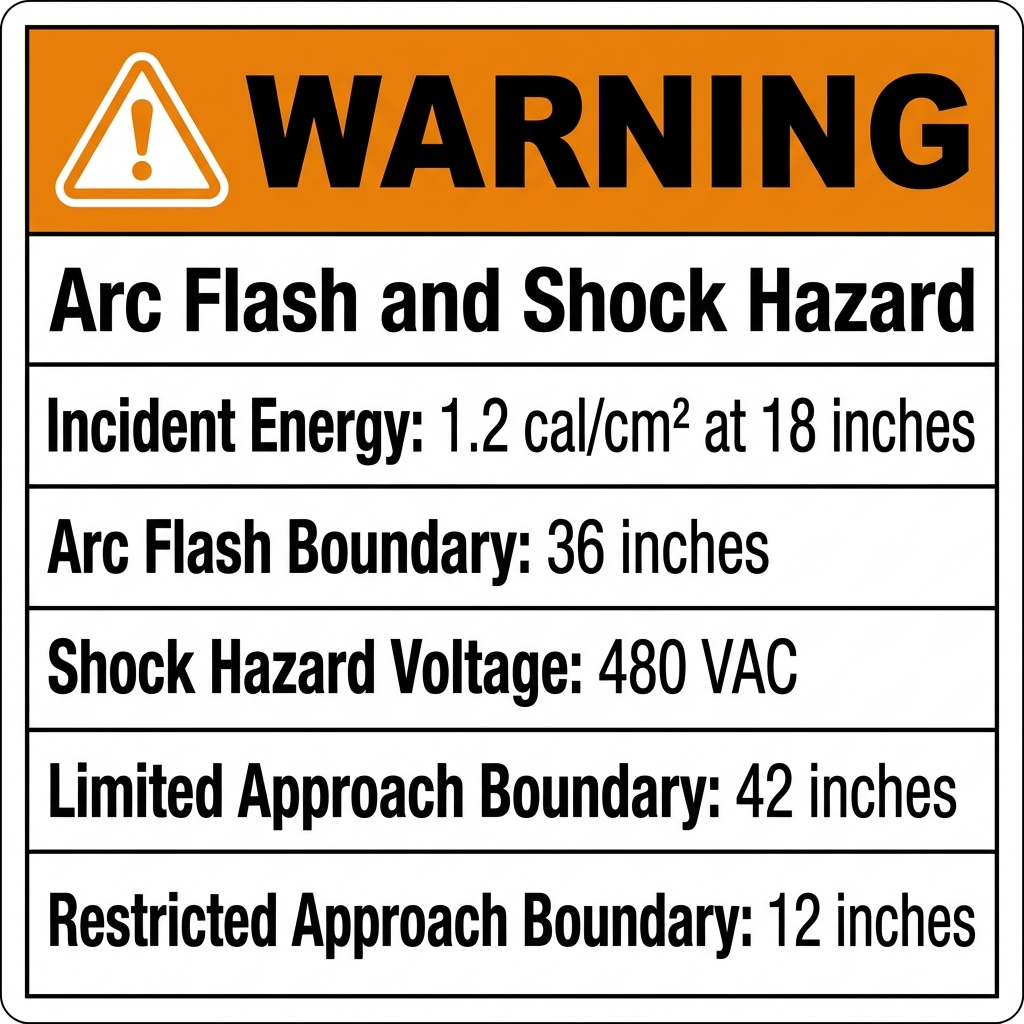
Figure 1: A standard NFPA 70E compliant industrial Arc Flash Warning Label.
Equipment ID and Nominal Voltage
Equipment ID identifies which specific piece of gear the label belongs to — a panelboard, a motor control center, a section of switchgear — and a label is only valid for the equipment it's physically attached to, not a general statement about the electrical room. Nominal voltage is the system voltage at that equipment, and it's what determines which shock approach boundaries apply before arc flash PPE even enters the conversation. Neither field carries a calculated value the way incident energy does — they're identifiers, and getting them right is what keeps the rest of the label meaningful for the correct piece of equipment.
AFPB: The Arc Flash Protection Boundary
The Arc Flash Protection Boundary is the distance from the equipment at which an unprotected worker would receive a second-degree burn — NFPA 70E sets that threshold at 1.2 cal/cm². Anyone outside the AFPB doesn't need arc-rated PPE for that specific hazard; anyone inside it does. It's calculated during the arc flash study for that specific gear and printed on the label so nobody has to do the math standing in front of a panel.
Incident Energy — the cal/cm² Number
This is the field most people read first, and often the only one they read. Incident energy is the thermal energy a worker's body could absorb during an arc flash, expressed in calories per square centimeter — the single number every PPE decision downstream of the label depends on. But it's only meaningful in combination with the working distance it was calculated at: move closer than that distance and your real exposure is higher than what's printed, which is exactly why reading incident energy in isolation is a mistake.
Min PPE Arc Rating
This is the field people most often confuse with incident energy, and the two are not interchangeable. Incident energy is what the equipment can produce; minimum PPE arc rating is the separate protective-equipment floor you're required to meet at that equipment. PPE rated below this number doesn't meet the minimum, full stop — PPE rated above it isn't a mistake, just extra margin. Keeping these two fields straight is the single most common label-reading mistake this post exists to head off.
Working Distance
Working distance is the distance from a worker's face and chest to the likely arc source, and it's the reference point the incident energy figure was calculated at. It only means anything paired with that incident energy value — treat it as a fixed safe distance on its own, and you've misread what the label is telling you.
Analysis Method
The label also states how its incident energy value was produced: either an engineering study specific to that equipment, or the simplified PPE category tables built into NFPA 70E. Knowing which method was used matters if the equipment or upstream protective devices ever change — a category-table label and a fully studied label don't carry the same margin of confidence.
For the complete field list and the distinction between those two numbers, review the ArcReady Study Guide §3, with practice questions in the Exam Companion.